Auburn Hills
A civil rights landmark neighborhood
Neighborhood · Kent County
Auburn Hills at a glance
A historically significant northeast Grand Rapids subdivision developed in the 1960s by four Black entrepreneurs, now on the National Register of Historic Places.
- Median Price
- $283,500
- Median $/sqft
- $178
- Median DOM
- 30 days
- Walk Score
- 33
- Population
- 659
- School District
- Grand Rapids Public Schools
- Tax Millage
- 33.63
Market data as of 2026-03. Population: City-Data/Niche estimate (census tract approximation).
Overview
Overview
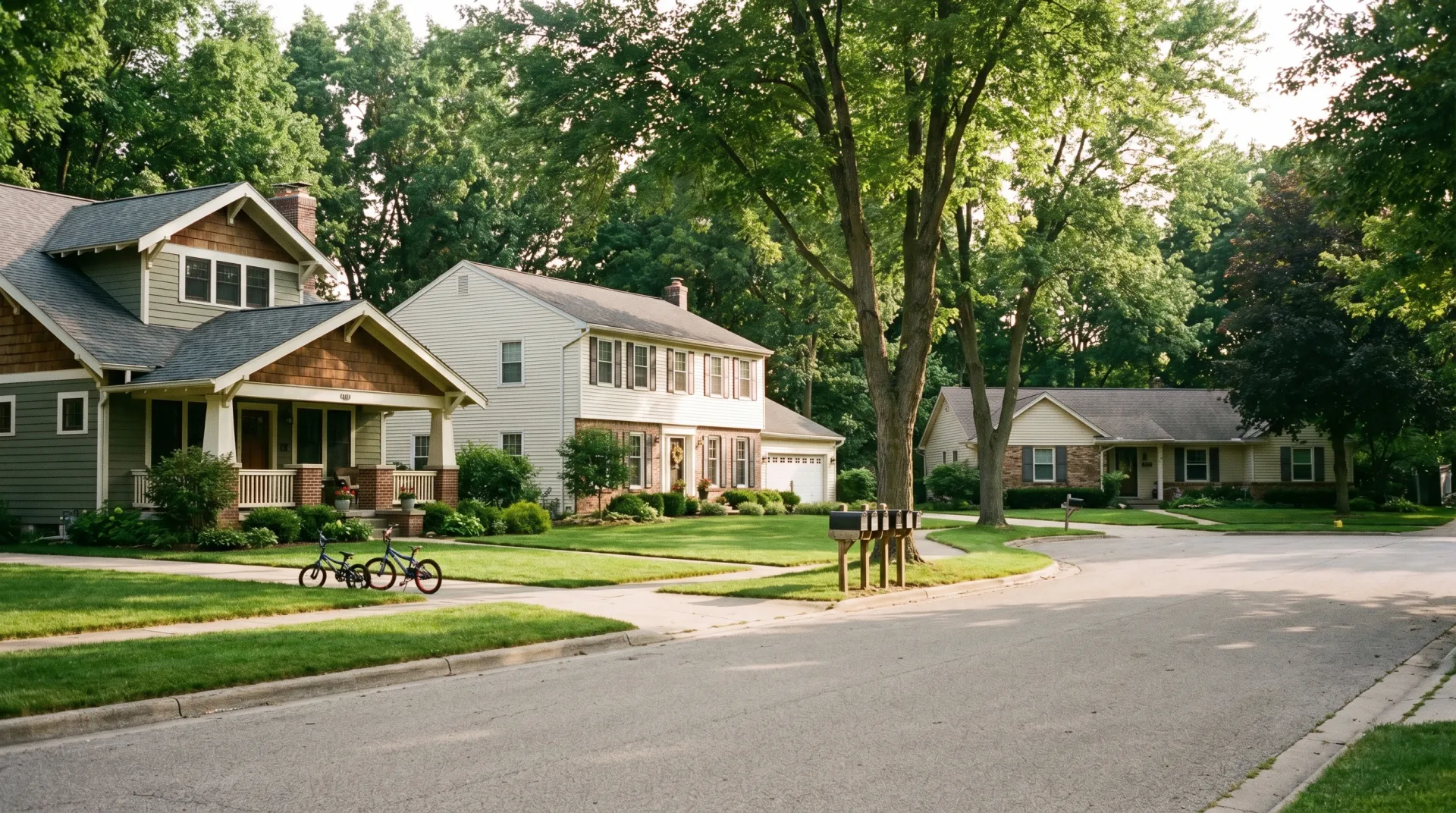
Auburn Hills is a small, historically significant residential subdivision on the northeast side of Grand Rapids. Located southeast of the intersection of Fuller Avenue NE and Knapp Street NE, the neighborhood encompasses approximately 20 acres and contains 51 homes on streets including Palmer, Dale, Travis, Drexel, and Auburn. The subdivision is bounded roughly by Plum Hollow Lane to the north, Auburn Avenue to the east, Sweet Street to the south, and Fuller Avenue to the west.
The neighborhood's identity is defined by its origin story: it was conceived and built in the early 1960s by four Black professionals as a direct response to discriminatory housing practices that limited where African American residents could purchase homes in Grand Rapids. That history earned the Auburn Hills Historic District a place on the National Register of Historic Places in January 2026.
Today, Auburn Hills is a quiet residential pocket with well-maintained midcentury ranch and split-level homes on modest lots. The streets are quiet, the lots are well kept, and the community reflects the diversity that was its founders' original vision. Provin Trails Park, a popular hiking and nature area, is located nearby to the northeast.
Real Estate
Real Estate
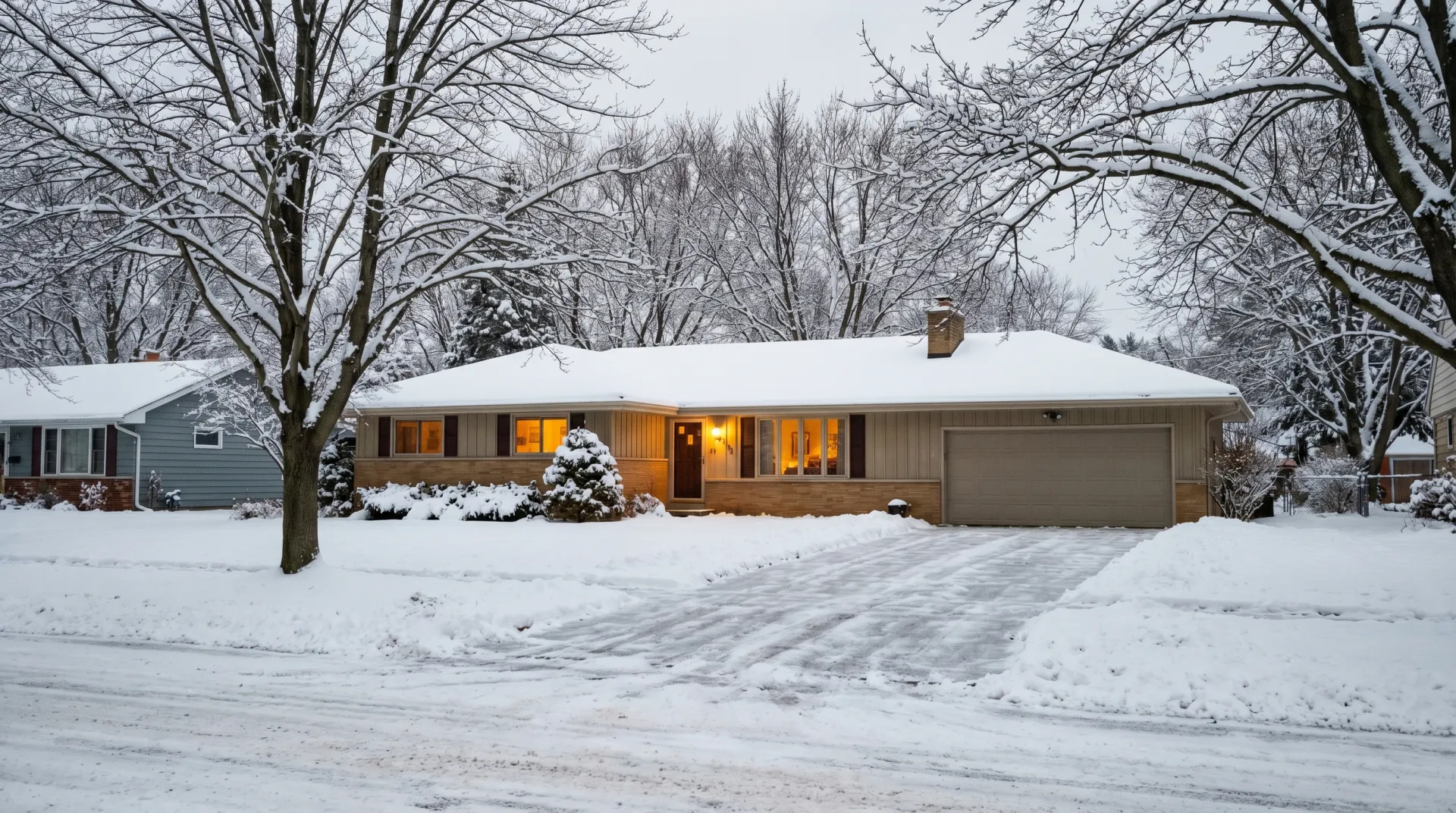
Auburn Hills contains 51 homes, all originally constructed in the mid-1960s. The housing stock is predominantly midcentury ranch and split-level designs, typically ranging from 1,200 to 2,000 square feet with 3 to 4 bedrooms. The median sale price is approximately $283,500 with a median price per square foot of $178.
What to expect:
- Single-family homes: Midcentury ranch and split-level styles, 3 to 4 bedrooms, 1,200 to 2,000 sq ft
- Lot sizes: Standard suburban lots on a curvilinear street layout typical of 1960s subdivision design
- New construction: None expected; the neighborhood is a designated historic district with all 51 original homes intact
- HOA prevalence: Not typical for this subdivision
- Price range: Approximately $200,000 for homes needing updates to $350,000 for renovated properties
The National Register designation does not impose exterior modification restrictions the way a local historic district ordinance would (unlike Heritage Hill, for example). However, the designation does acknowledge the neighborhood's historical significance and may make properties eligible for certain preservation tax credits. Inventory is extremely limited given the small size of the subdivision, so homes here sell infrequently.
Schools
Schools

Auburn Hills falls within the Grand Rapids Public Schools (GRPS) district. GRPS uses an attendance-area-based assignment system, and the specific school serving an Auburn Hills address can be determined using the GRPS Attendance Area Finder online.
GRPS operates multiple elementary, middle, and high school options accessible to Auburn Hills residents, including theme schools and Centers of Innovation available through the Schools of Choice program. The Rapid provides bus transportation for GRPS high school students.
Private and charter school options in the broader northeast Grand Rapids area are also available.
Parks
Parks and Recreation
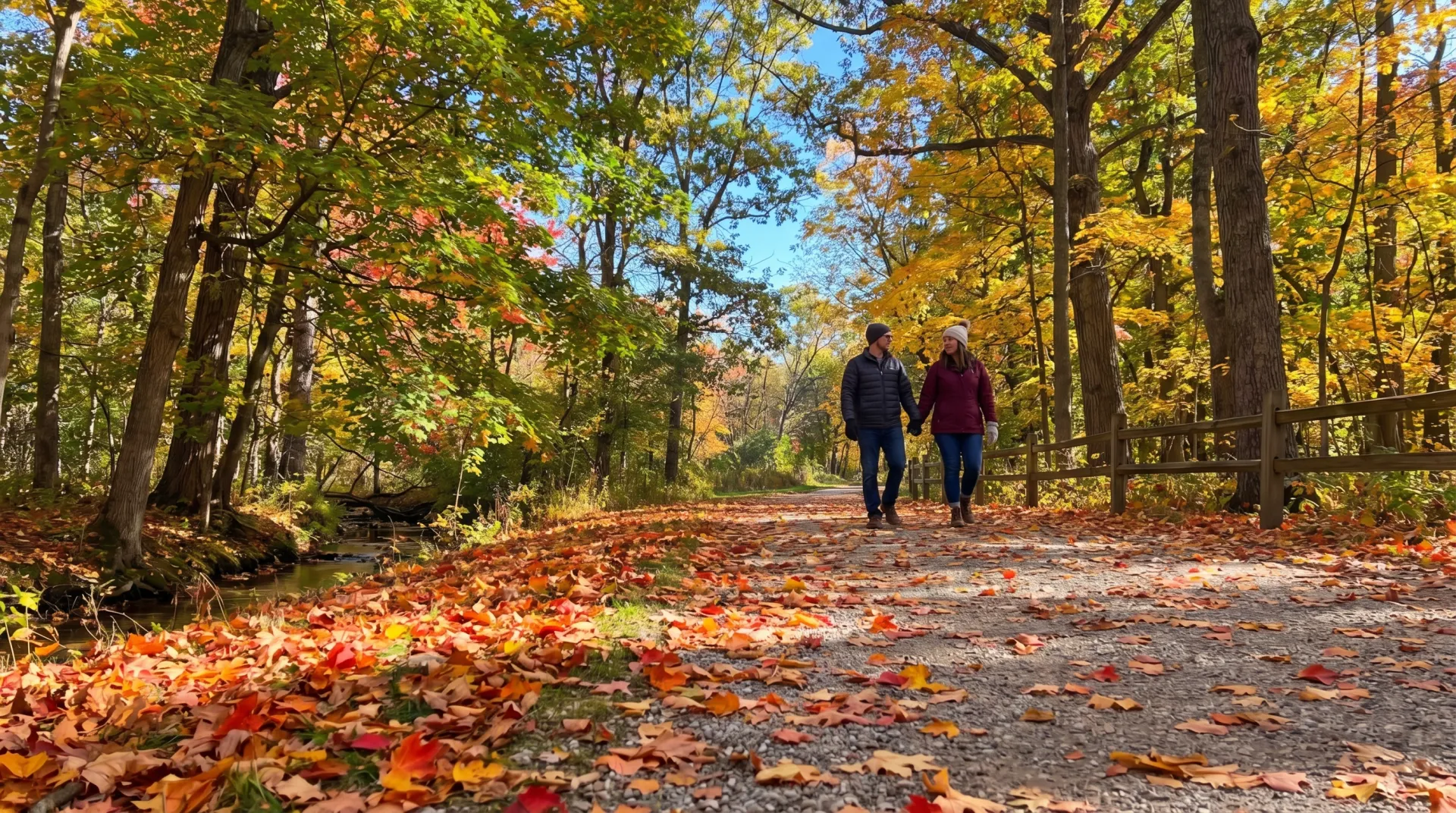
Provin Trails Park is the most notable recreation area near Auburn Hills, located northeast of the subdivision. Provin Trails offers a network of hiking trails through wooded terrain with scenic overlooks, making it a popular destination for walking, trail running, and nature observation year-round.
The broader Grand Rapids parks system provides additional recreation options within a short drive, including the network of city parks throughout the northeast side. Fuller Park, to the south along Fuller Avenue, offers additional green space.
The neighborhood's location on the northeast fringe of the city also provides relatively easy access to the rural and semi-rural areas of Plainfield Township for additional outdoor recreation.
Getting Around
Transportation
Auburn Hills is a car-dependent neighborhood with a Walk Score of 33. The subdivision's location on the northeast fringe of Grand Rapids means most daily errands require a vehicle.
Major road access: Fuller Avenue NE (western boundary, a major north-south arterial) provides direct access to downtown Grand Rapids to the south and Plainfield Township to the north. Knapp Street NE runs east-west just north of the subdivision. These roads connect to US-131 and I-96 for regional commuting.
Public transit: The Rapid provides some bus service along Fuller Avenue, connecting to the broader Grand Rapids transit network. However, service frequency on the northeast side is lower than on routes closer to downtown.
Commute times: Downtown Grand Rapids is approximately 4 miles south via Fuller Avenue, a 10 to 15 minute drive. Gerald R. Ford International Airport is approximately 15 miles southeast, a 20 to 25 minute drive.
Community
Community
Auburn Hills has an estimated population of approximately 659 residents, with a homeownership rate of around 59%. The neighborhood is small enough that residents generally know their neighbors.
The neighborhood's significance was formally recognized when the Auburn Hills Historic District was added to the National Register of Historic Places on January 30, 2026. The Michigan State Historic Preservation Office cited the neighborhood's importance for its role in the history of housing discrimination and the struggle for civil rights in Grand Rapids.
Local historians and community advocates have worked to preserve and publicize the Auburn Hills story, including efforts documented by the Grand Rapids Historical Society and covered extensively by West Michigan media outlets including WOOD-TV, WZZM, and Grand Rapids Magazine.
History
History
Auburn Hills stands as one of the most significant civil rights landmarks in Grand Rapids' built environment. In 1962, four Black professionals, Dr. Julius Franks Jr. (President of the West Michigan Dental Society and the first Black All-American at the University of Michigan), J.E. Adams (a teacher, administrator, and school principal), Joseph W. Lee (a social worker and twice president of the Grand Rapids Urban League), and Samuel Triplett (a teacher and the first African American to teach in Grand Rapids Public Schools at South High), formed the Auburn Hills Land Development Corporation.
The four partners purchased a 20-acre parcel from the City of Grand Rapids for $60,000. Their plan was straightforward: build a residential subdivision where anyone could buy a home regardless of race, at a time when redlining and discriminatory lending practices severely restricted where Black residents could live in the city.
The project faced organized opposition. Within weeks of the announcement, a coalition called the White Citizens Committee mobilized against the development. On December 18, 1963, the City Commission moved its meeting to Creston High School's auditorium to accommodate an estimated 500 protesters. The struggle spanned two contentious years before the Grand Rapids Chamber of Commerce intervened, charging the City with stalling and demanding the development be allowed to proceed.
The first of 51 homes was begun by Joseph W. Lee at 1706 Auburn NE in 1964 and completed in 1965. The homes were marketed and sold without regard to race. On January 30, 2026, the Auburn Hills Historic District was added to the National Register of Historic Places, recognized as one of the city's only known neighborhoods developed by African Americans in direct response to racist housing policies.
Investment
Investment Potential
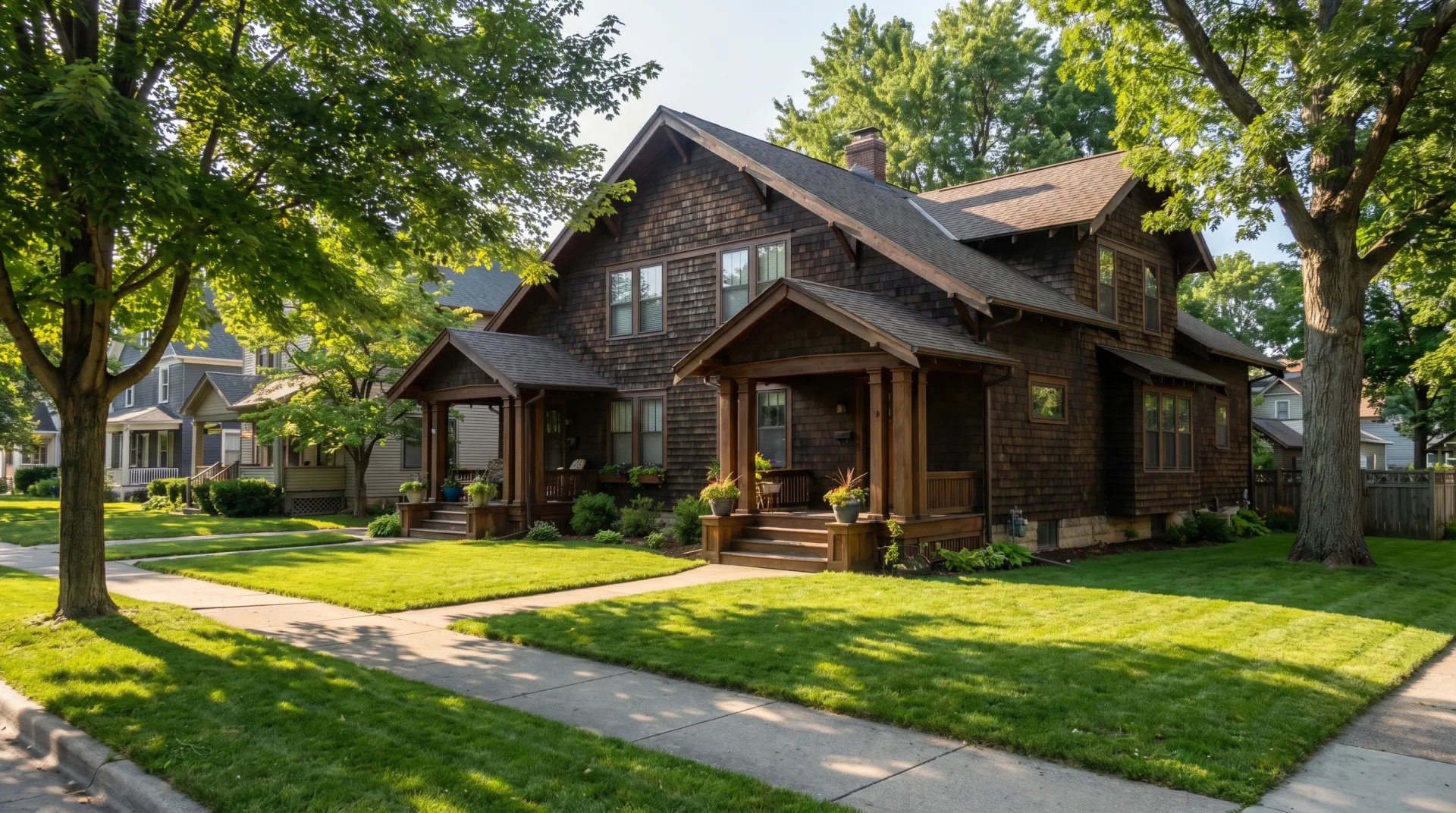
Auburn Hills is not a conventional investment target. The subdivision contains only 51 homes, turnover is infrequent, and the neighborhood's identity is strongly rooted in owner occupancy. The National Register of Historic Places designation underscores the area's significance but does not impose local-level restrictions on what owners can do with their properties.
For buyers interested in a historically significant property with a compelling story, Auburn Hills offers a unique opportunity. The homes are well-built midcentury construction on a quiet, established street grid. Prices are moderate relative to the broader northeast Grand Rapids market.
The limited inventory means that when a home does become available, it may attract attention from buyers specifically seeking the neighborhood's character and history. Rental demand exists but is secondary to the owner-occupant market.
Nathan's Take
The local read.
Auburn Hills is one of the most important neighborhoods in Grand Rapids, not because of its size or its price point, but because of what it represents. This is a 51-home subdivision built by four Black professionals in the 1960s who fought organized opposition to create a neighborhood where anyone could buy a home. That story earned it a place on the National Register of Historic Places in January 2026.
From a pure real estate perspective, this is a small, quiet, well-maintained neighborhood of midcentury ranch and split-level homes. Prices are moderate, typically in the low $200s to mid $300s, and homes rarely come on the market because people tend to stay. Provin Trails Park is nearby for hiking and nature access, and Fuller Avenue provides a direct route to downtown.
Buyers should understand that this is a small subdivision with limited inventory. If a home comes on the market here, it will not sit long. The National Register designation is an honor, not a restriction. It does not prevent you from renovating or modifying your property the way a local historic district ordinance would.
If you want a home with a meaningful history in a stable, quiet neighborhood on the northeast side, Auburn Hills deserves your attention. Homes here carry a story that very few neighborhoods in West Michigan can match.
Location
Auburn Hills on the map
Approximate center of the Auburn Hills area. Drag to explore the surrounding neighborhoods and commute corridors.
Listings
Browse homes in Auburn Hills.
See what is currently listed in Auburn Hills and the surrounding area.
Resources
Helpful links
News coverage of the 2026 National Register of Historic Places designation
District homepage, school directory, and enrollment information
Determine which GRPS school serves a specific address in Auburn Hills
Bus schedules, route maps, and fare information for public transit
Official municipal site including property tax estimator and planning resources
Visitor and resident guide with dining, events, and neighborhood profiles
More in Grand Rapids
Other neighborhoods in Grand Rapids.
Auburn Hills is one of several neighborhoods in Grand Rapids. Each has its own character and price range.
Questions about Auburn Hills?
Ask Nathan.
Send a note with what you are looking for in Auburn Hills, price range, timeline, school or commute priorities, and Nathan will follow up.
Contact
Get in touch
Send a message and Nathan will get back to you within one business day.
Message received
Thank you. Nathan will be in touch soon.
Nathan typically responds within one business day.
— Nathan Strodtbeck, REALTOR®