Madison Area
Affordable roots near Wealthy Street
Neighborhood · Kent County
Madison Area at a glance
A southeast Grand Rapids neighborhood with affordable Craftsman and Foursquare homes, strong community organizations, and proximity to Wealthy Street businesses.
- Median Price
- $240,000
- Median DOM
- 16 days
- Walk Score
- 79
- Population
- 5,570
- School District
- Grand Rapids Public Schools
- Tax Millage
- 33.63
Market data as of 2026-03. Population: Niche.com / U.S. Census ACS estimates.
Overview
Overview
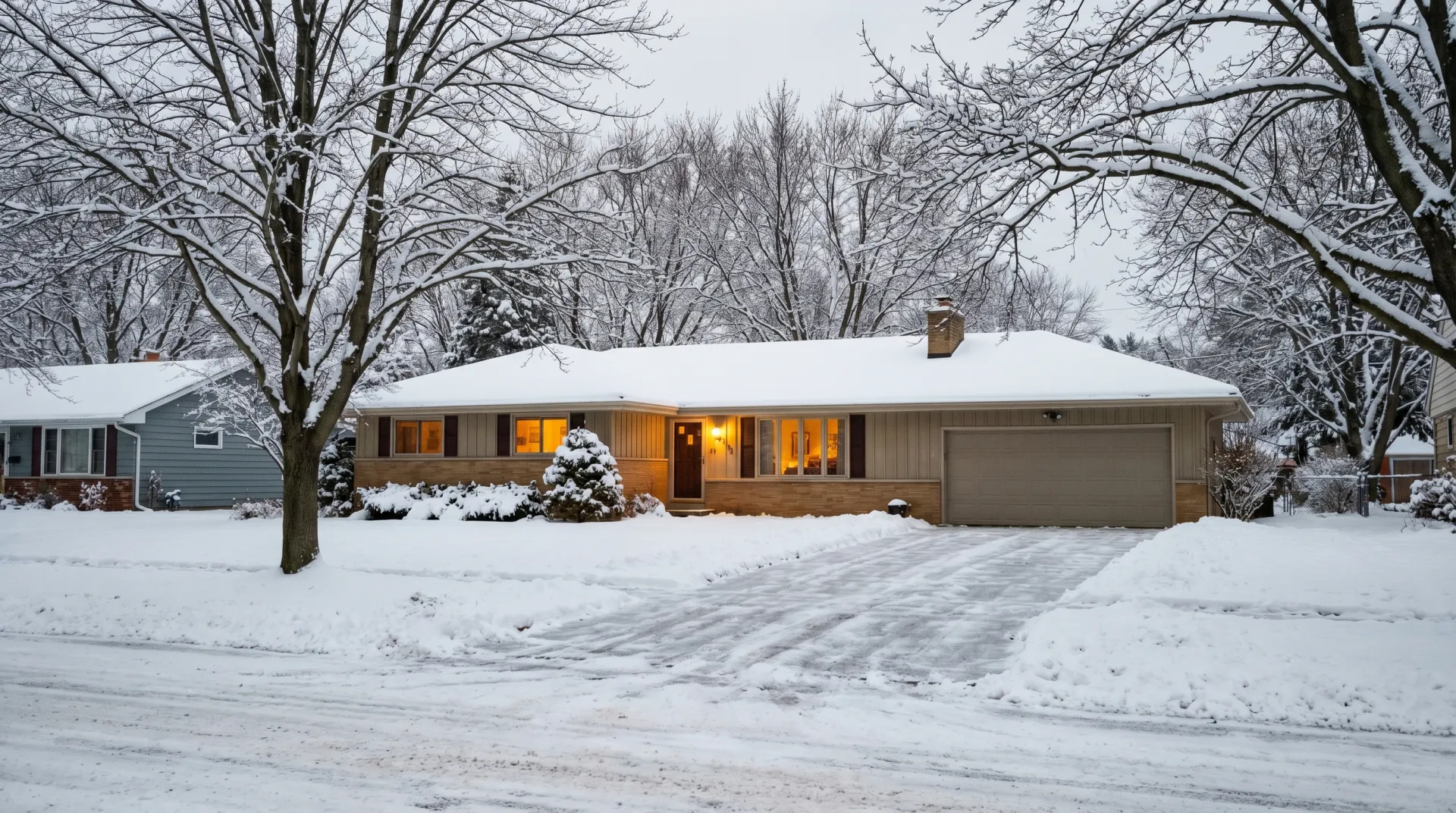
The Madison Area is a residential neighborhood in southeast Grand Rapids, located approximately two miles from downtown. The neighborhood sits within ZIP code 49507 and is bounded roughly by Wealthy Street to the north, Fuller Avenue to the east, Burton Street to the south, and Madison Avenue SE to the west. Neighboring communities include Baxter, Garfield Park, Oakdale, and South East Community.
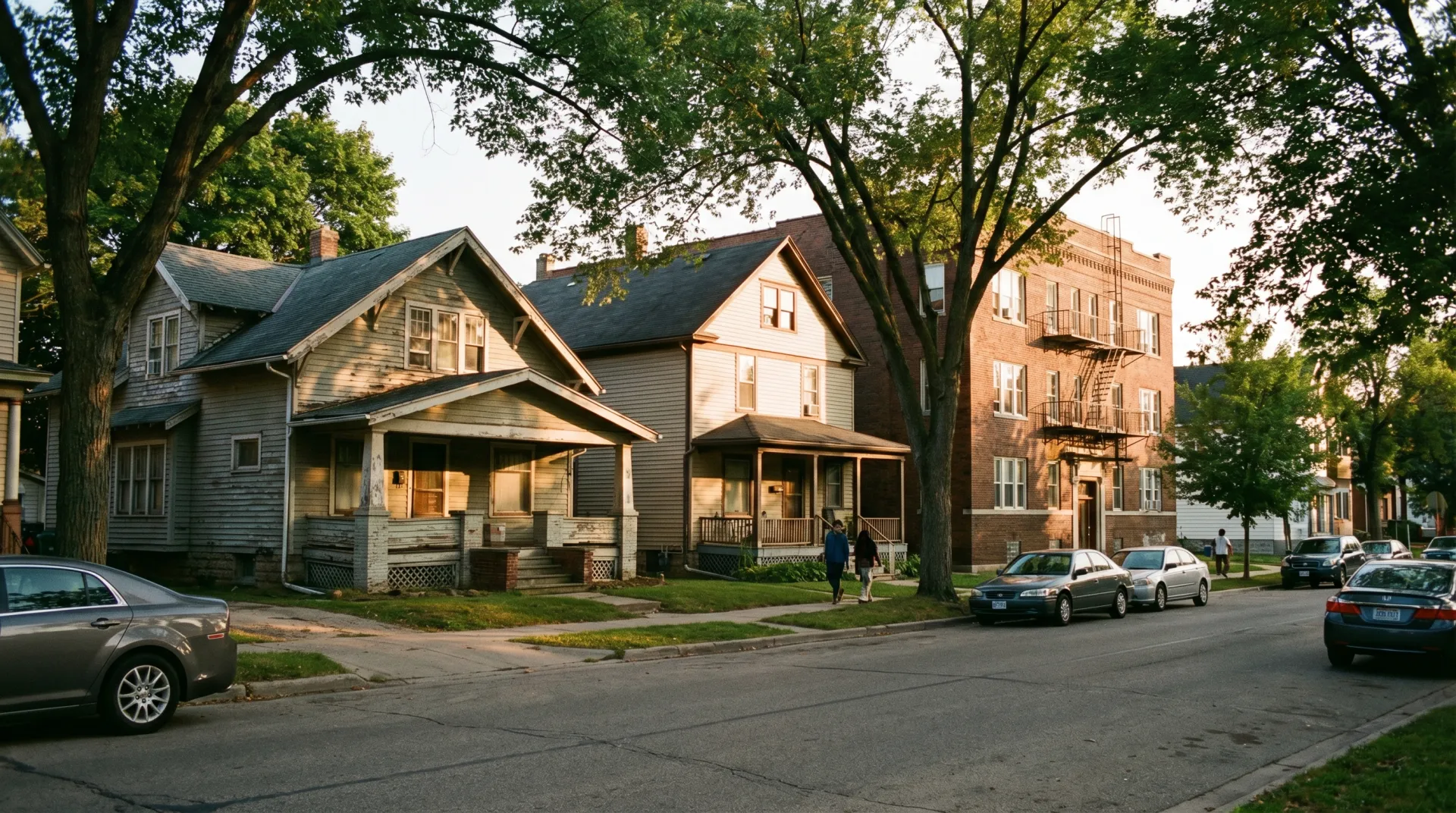
The neighborhood's character is defined by tree-lined residential streets with Craftsman bungalows and American Foursquare homes built primarily between 1890 and 1925. Madison Avenue SE serves as the primary commercial corridor, hosting a mix of small businesses, multicultural restaurants, barbershops, and service stores that reflect the neighborhood's entrepreneurial energy. The Wealthy Street business corridor along the northern edge provides additional access to coffee shops, boutiques, and dining.
The Madison Area has a population of approximately 5,570 and a dense, walkable layout. The neighborhood has experienced cycles of investment and disinvestment over the decades but is currently in an active revitalization phase, supported by the Madison Neighborhood Association and partnerships with local community development organizations.
Real Estate
Real Estate
The Madison Area is one of the more affordable neighborhoods within the City of Grand Rapids, making it accessible for first-time buyers and investors alike. Median home prices sit around $240,000, well below the citywide median of approximately $285,000 to $308,000.
What to expect:
- Single-family homes: 2 to 4 bedrooms, 1,000 to 1,800 sq ft, predominantly Craftsman bungalows and American Foursquare styles
- Multi-unit properties: Duplexes and small multi-family buildings are present throughout the neighborhood
- Lot sizes: Standard urban lots, typically 0.08 to 0.15 acres
- New construction: Limited in the established residential core; new development activity is concentrated along commercial corridors
- HOA prevalence: Uncommon; most properties are standalone
- Vacancy rate: Approximately 2.8%, which is lower than 80% of all U.S. neighborhoods, indicating tight housing supply relative to demand
Homes in the Madison Area sell relatively quickly, averaging around 16 days on market. The neighborhood is rated as better suited for first-time buyers than approximately 87% of Michigan neighborhoods based on affordability metrics.
Architecture
Architecture
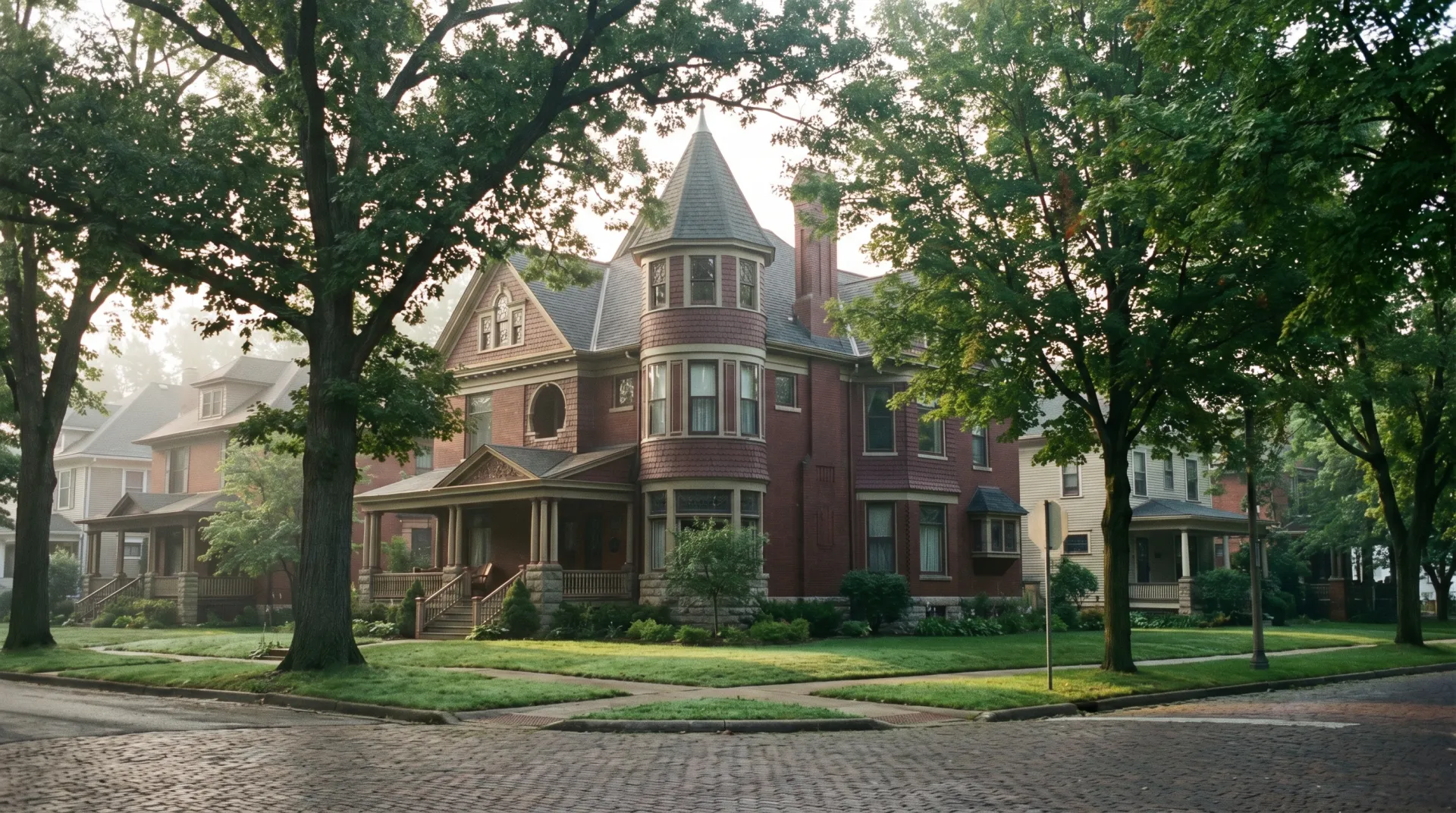
The Madison Area's residential architecture reflects the building patterns of Grand Rapids' working-class neighborhoods from the late 19th and early 20th centuries. The dominant styles are Craftsman bungalows and American Foursquares, most built between 1890 and 1925. These homes typically feature 1 to 1.5 stories (bungalows) or 2 to 2.5 stories (Foursquares), with front porches, simple woodwork detailing, and functional floor plans.
Craftsman homes in the neighborhood commonly display low-pitched gable roofs, wide eaves with exposed rafters, and tapered porch columns on masonry pedestals. Foursquares present the style's characteristic box form with hipped roofs, central dormers, and symmetrical facades. Some homes retain original built-in cabinetry, hardwood floors, and leaded glass windows.
The neighborhood is not a designated historic district, so exterior modifications do not require Historic Preservation Commission review. This gives homeowners more flexibility for renovation and updating while maintaining the general character of the streetscape.
Schools
Schools
The Madison Area falls within the Grand Rapids Public Schools (GRPS) district. GRPS uses an attendance-area-based assignment system; the specific school serving a Madison Area address can be determined using the GRPS Attendance Area Finder tool online.
Innovation Central High School is located just north of the neighborhood and serves as a GRPS high school option for area residents. Private and charter school options within a short drive include Grand Rapids Christian Schools, Catholic Central High School, and several K-8 charter academies.
GRPS participates in Schools of Choice, allowing residents to apply to attend theme schools and Centers of Innovation throughout the district beyond their assigned neighborhood school.
Dining
Dining
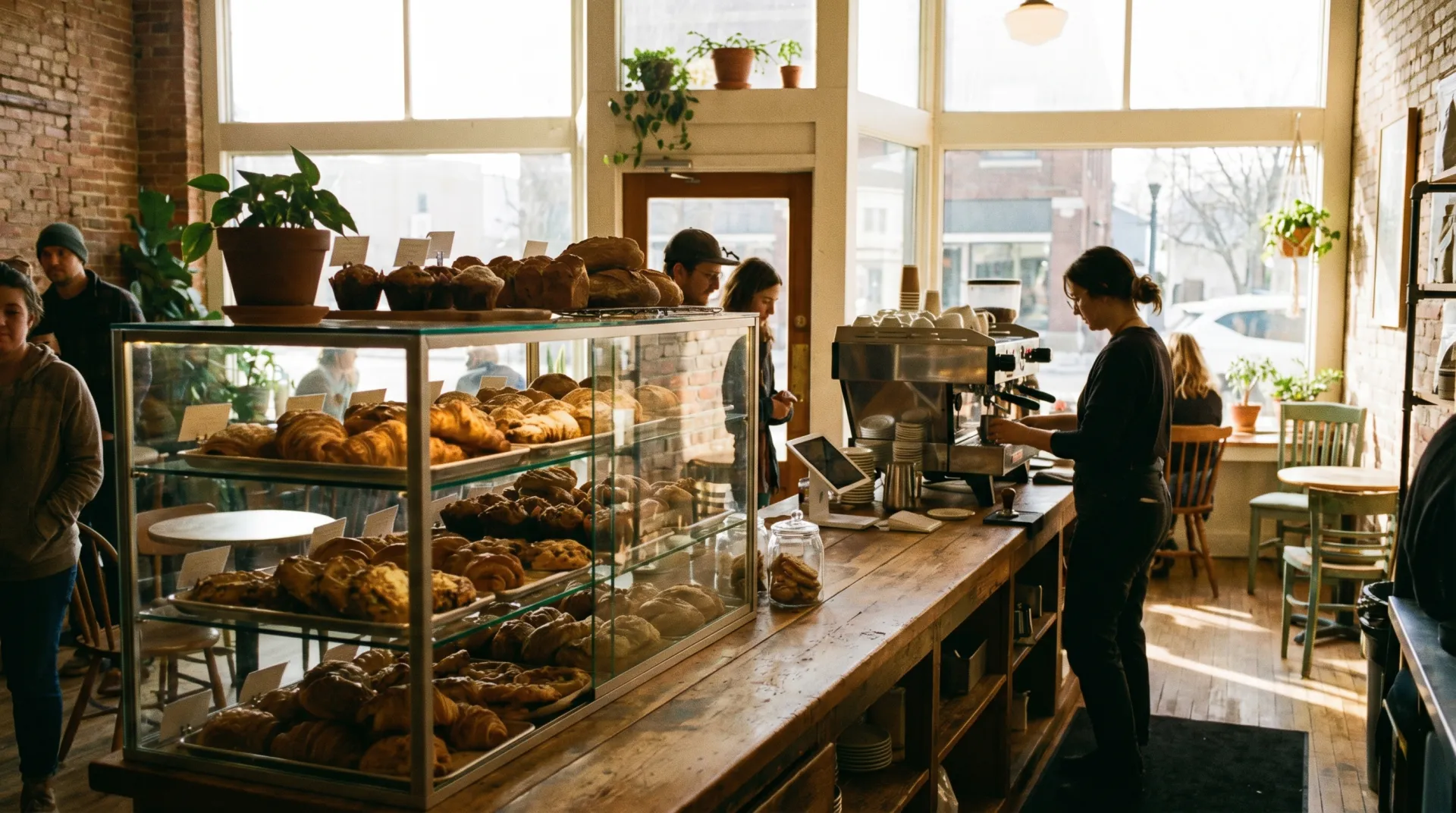
The Madison Area's dining scene reflects its multicultural character, with restaurants and food businesses concentrated along Madison Avenue SE and the nearby Wealthy Street corridor.
Madison Avenue hosts an array of small, independently owned restaurants serving cuisines from multiple traditions. The corridor's character is defined by its mix of sit-down restaurants, takeout spots, and specialty markets.
The Wealthy Street business corridor along the neighborhood's northern edge provides access to more than 20 dining and drinking establishments, including Donkey Taqueria (authentic Mexican food and margaritas), Electric Cheetah, The Winchester, Testa Rossa Pizzeria, Thai Table, and Good Judy's Organic Market & Cafe. Speciation Cellars offers flights of unique ales and ciders nearby.
The Southeast Area Farmer's Market, held seasonally at Martin Luther King Jr. Park, features local produce and handcrafted goods.
Parks
Parks and Recreation
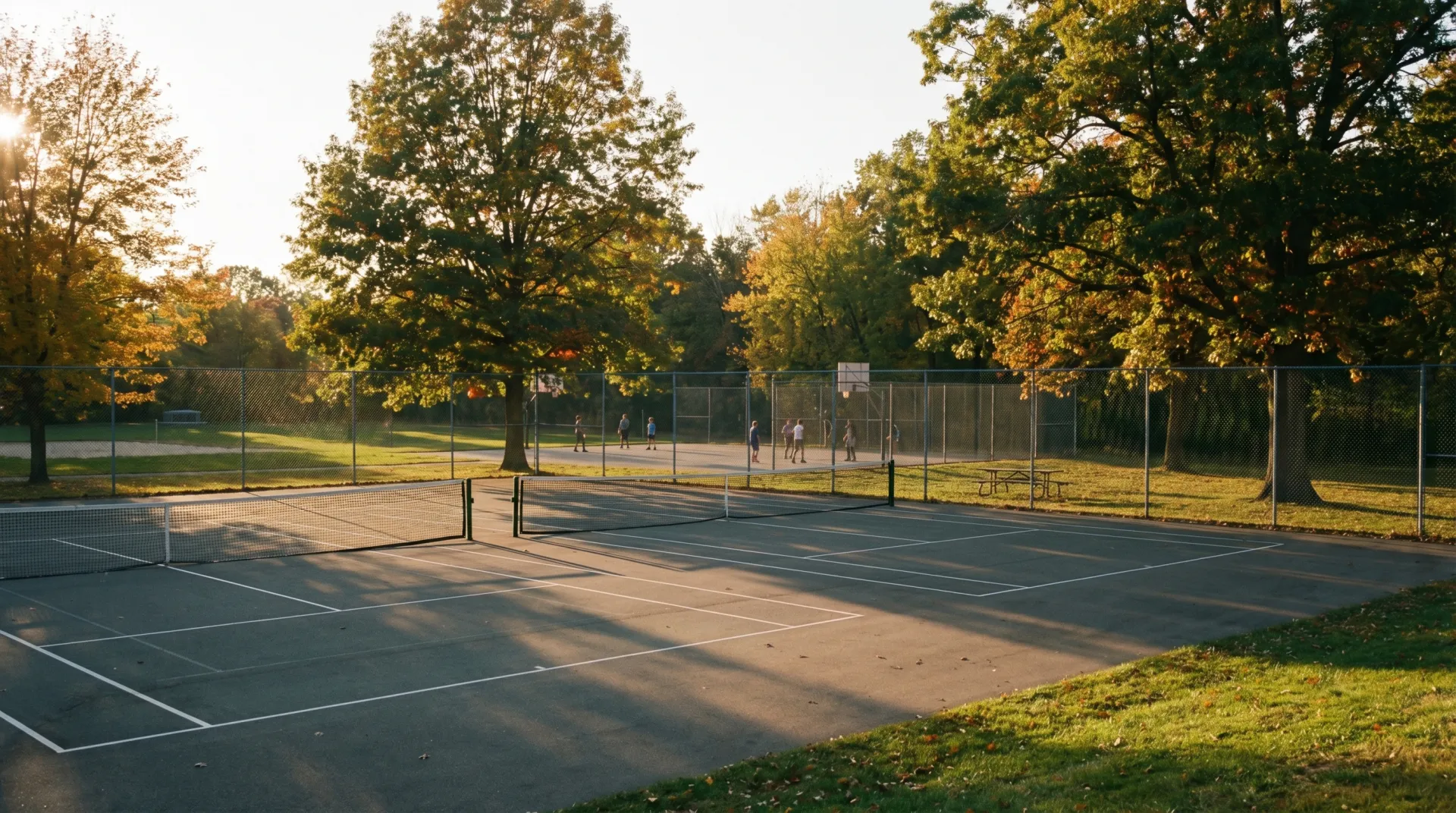
The Madison Area has access to several parks and green spaces that serve as community gathering points.
Joe Taylor Park (1031 Baxter St SE) is a 2.3-acre community park featuring a playground with modern equipment, a splash pad (open seasonally 10 AM to 9 PM), a picnic shelter with tables and grills, a basketball court, and public restrooms. The park is a popular gathering spot for neighborhood events.
Martin Luther King Jr. Park (900 Fuller Ave SE) is one of the area's largest outdoor spaces at 16 acres. The park features the newly opened MLK Park Community Center (opened February 2026), a playground, a pool with water slide, tennis and basketball courts, baseball diamonds, a splash pad, a fitness loop, a community garden, and a walking trail. The community center provides year-round programming including open gym hours, pickleball, youth and adult classes, and after-school programs.
Alexander Park and Gerald R. Ford School Park are also accessible from the neighborhood.
Getting Around
Transportation
The Madison Area's location approximately two miles southeast of downtown provides reasonable commute access via multiple routes. Madison Avenue SE and Wealthy Street serve as the primary arterials connecting the neighborhood to downtown and the broader road network. Burton Street and Eastern Avenue provide additional north-south and east-west connections.
Public transit is available through The Rapid's bus network. Routes serving the neighborhood include Route 1 (Division/Madison) and Route 5 (Wealthy), with connections to Rapid Central Station for transfers to the Silver Line BRT and other routes. Fixed-route buses operate at 30 to 60 minute headways depending on route and time.
The neighborhood's Walk Score of 79 ("Very Walkable") reflects the mix of residential streets with nearby commercial corridors accessible on foot. Gerald R. Ford International Airport is approximately 11 miles southeast, a 15 to 18 minute drive.
Community
Community
The Madison Neighborhood Association (also known as the Madison Area Neighborhood Association, or MANA) has served the community since the late 1970s. Originally established as part of the Madison Square Co-Op program, the organization became independent in 1996 and focuses on neighborhood revitalization, safety, community engagement, and partnerships with local institutions and city government.
Madison Square emerged as a full-fledged neighborhood shopping area in the mid-1880s, partly due to the location of the fair grounds and a boom in home building, making it the first outlying shopping center in Grand Rapids. Community activist Ella Sims and former mayor Christian Sonneveldt led a fundraising effort in the early 1990s to establish the Madison Square Branch Library (1201 Madison Ave SE), which opened as a GRPL branch and continues to serve as a community anchor.
The neighborhood benefits from partnerships with community development organizations including ICCF Community Homes, which has invested in housing rehabilitation and new construction in the area.
History
History
The Madison Area's development began in the mid-1880s when Madison Square emerged as Grand Rapids' first outlying commercial center, driven by the location of the fair grounds and a residential construction boom. The streets were platted following the grid established by Judge Morrison's Addition, which created Madison, Cherry, Jefferson, and Wealthy streets. Wealthy Street was named after Morrison's second wife, Wealthy Davis, whom he married in 1850.
The neighborhood's residential core was built out between 1890 and 1925 to house workers in Grand Rapids' furniture and manufacturing industries. Churches of various denominations became cornerstones of community life. Madison Avenue developed as a commercial strip serving the surrounding residential blocks.
By the mid-to-late 20th century, the Madison Area experienced disinvestment as manufacturing jobs left the city. Community organizing efforts, including the formation of the Madison Area Neighborhood Association and the campaign for the Madison Square Branch Library in the early 1990s, laid the groundwork for the revitalization that continues today. New housing investment, small business growth along the commercial corridors, and community center development at MLK Park represent the current phase of the neighborhood's evolution.
Investment
Investment Potential
The Madison Area presents an affordable entry point for investment in Grand Rapids' southeast side. Median home prices around $240,000, combined with a vacancy rate of approximately 2.8% (lower than 80% of U.S. neighborhoods), suggest steady rental demand in a tight housing market.
The neighborhood's mix of single-family homes and small multi-unit properties provides options for both rental income and value-add renovation strategies. Homes needing work can be found below $200,000, while updated properties sell in the $250,000 to $325,000 range.
Ongoing community development investment, including the new MLK Park Community Center (opened 2026), housing rehabilitation projects by ICCF Community Homes, and commercial corridor improvements, supports long-term appreciation. The Wealthy Street business corridor continues to attract new businesses, which benefits adjacent residential areas.
Unlike Cherry Hill or Heritage Hill, the Madison Area is not a designated historic district, so renovation projects do not require Historic Preservation Commission review. This gives investors more flexibility and shorter timelines for exterior improvements.
Important for short-term rental investors: Grand Rapids requires a Home Occupation Class C License and Special Land Use Permit for short-term rentals, with significant restrictions. Investors should underwrite to long-term rental income only.
Nathan's Take
The local read.
The Madison Area is where I point buyers who want to be in the City of Grand Rapids at a price point that still makes sense. At a median around $240,000, you are getting into a neighborhood with solid bones, walkable access to Wealthy Street businesses, and a community that is actively investing in its own future. The new MLK Park Community Center that opened in early 2026 is a real asset.
The housing stock here is honest. Craftsman bungalows and Foursquares in the 1,000 to 1,800 square foot range, built for working people and still serving that purpose. Renovation quality varies, so inspect carefully. Pre-1978 lead paint compliance is a factor on most properties.
For investors, the math here can work. The vacancy rate is low, rental demand is consistent, and you are not subject to Historic Preservation Commission review on exterior modifications, which simplifies renovation timelines and budgets. Duplexes and small multi-family properties are available at entry points that pencil for buy-and-hold strategies.
The trade-off is that the Madison Area is still in a revitalization cycle. The commercial corridors are growing but not yet fully built out, and some blocks have more deferred maintenance than others. That is exactly where opportunity lives for buyers who are willing to do their due diligence and invest alongside the community trajectory.
Location
Madison Area on the map
Approximate center of the Madison Area area. Drag to explore the surrounding neighborhoods and commute corridors.
Listings
Browse homes in Madison Area.
See what is currently listed in Madison Area and the surrounding area.
Resources
Helpful links
Community organization for the Madison Area with contact information and engagement opportunities
District homepage, school directory, and enrollment information
Determine which GRPS school serves a specific address in the Madison Area
Branch library at 1201 Madison Ave SE with hours, programs, and services
Bus schedules, route maps, and fare information for public transit
Park information, recreation programs, and community center schedules including MLK Park
Official municipal site including property tax estimator and planning resources
More in Grand Rapids
Other neighborhoods in Grand Rapids.
Madison Area is one of several neighborhoods in Grand Rapids. Each has its own character and price range.
Questions about Madison Area?
Ask Nathan.
Send a note with what you are looking for in Madison Area, price range, timeline, school or commute priorities, and Nathan will follow up.
Contact
Get in touch
Send a message and Nathan will get back to you within one business day.
Message received
Thank you. Nathan will be in touch soon.
Nathan typically responds within one business day.
— Nathan Strodtbeck, REALTOR®